
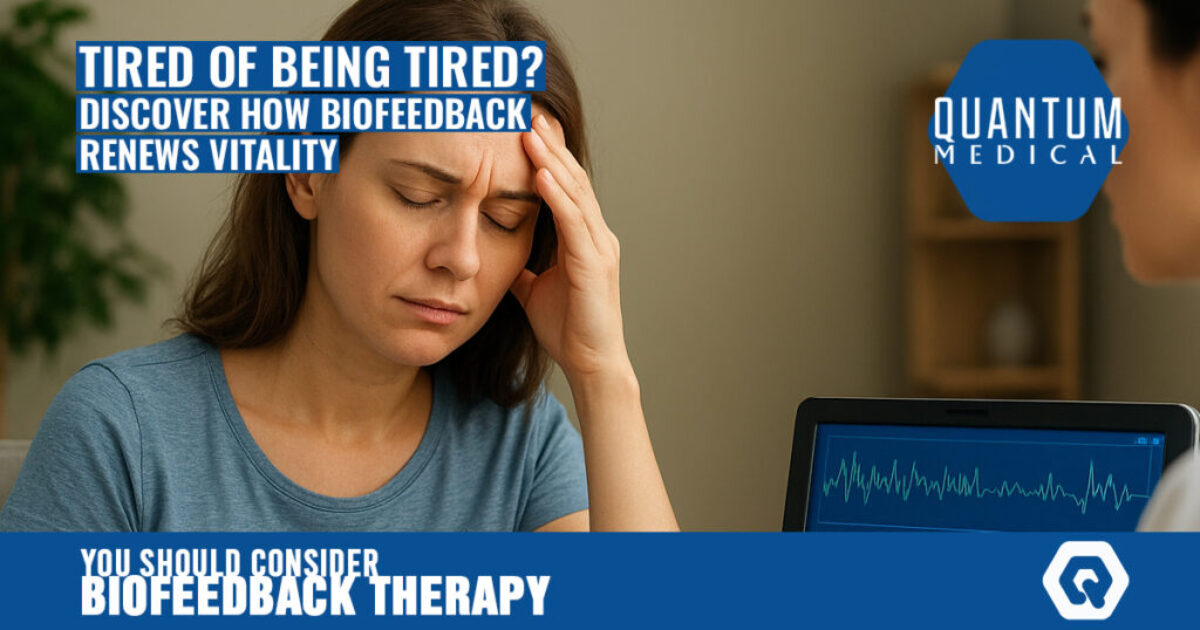

Tired of Being Tired? Discover How Biofeedback Renews Vitality
Many individuals today struggle with a persistent lack of energy. Despite getting rest, they wake up tired, struggle through daily tasks, and often feel unable to meet the demands of work, family, and personal goals. This leads not only to physical exhaustion but also to emotional frustration and anxiety about coping with life.
Chronic fatigue and low vitality are not merely about “being tired.” They often represent a complex imbalance in the body’s regulatory systems—particularly the nervous system and its connection to stress, recovery, and energy management. To address this issue, it is essential to look beyond quick fixes and support the body’s natural ability to restore balance.
Biofeedback provides a unique and evidence-based approach to help regulate these systems and promote lasting improvements in energy levels and vitality.
The Physiology of Fatigue
Constant fatigue often arises from dysregulation within the body’s interconnected systems. Several factors may contribute:
1. Autonomic Nervous System Imbalance
The autonomic nervous system (ANS) governs the body’s stress response and recovery. Chronic stress or emotional strain can lock the body in “fight-or-flight” mode, reducing the ability to rest and restore energy. Biofeedback helps retrain this balance.
2. Reduced Heart Rate Variability (HRV)
Low HRV is a common indicator of poor adaptability and resilience. People with chronic fatigue often display reduced HRV, making it harder to bounce back from daily stress. HRV biofeedback is designed to improve this adaptability and support higher energy.
3. Brainwave Dysregulation
Suboptimal brainwave patterns—such as excessive slow waves during wakefulness—can produce mental fog and fatigue. EEG biofeedback (neurofeedback) trains the brain toward more efficient patterns, improving clarity and vitality.
4. Hidden Stressors and Energy Drains
Emotional burdens, unresolved trauma, inflammation, or subtle metabolic imbalances often drain energy despite proper rest. Identifying these patterns is crucial in designing a personalized strategy for recovery.
Biofeedback and Quantum Biofeedback Explained
Biofeedback is a therapeutic technique in which sensors record physiological processes such as heart rate, breathing, or brain activity. This data is then displayed in real time, enabling clients to learn how to regulate their body’s responses.
Quantum biofeedback builds upon this foundation by integrating advanced signal analysis and frequency-based balancing, helping to detect subtle energetic imbalances and restore harmony.
Devices such as the NUCLEUS and ED.X from Quantum Medical are particularly effective because they provide automated scanning, multi-system analysis, and clear visualization. This enables practitioners to quickly identify energy imbalances and tailor personalized protocols. Additionally, the advanced software tracks progress over time, offering precise insights into energy restoration.
How Biofeedback Supports Energy and Vitality
A structured biofeedback program addresses fatigue at its roots rather than masking symptoms. It does so by improving self-regulation, enhancing resilience, and supporting the body’s capacity to generate energy.
Step 1: Comprehensive Assessment
An initial scan creates a detailed overview of autonomic, brainwave, and energetic activity. This provides clarity on which systems are overtaxed and where regulation is weakest. Clients often feel relief when they see that their fatigue has identifiable physiological roots, not just “lack of willpower.”
Step 2: Corrective Training
Training protocols may include:
- HRV biofeedback to strengthen parasympathetic balance and restore autonomic flexibility.
- EEG neurofeedback to reduce brainwave inefficiency and increase clarity.
- Quantum resonance protocols to harmonize energetic imbalances and unblock hidden stress patterns.
Step 3: Integration into Daily Life
Progress is reinforced with lifestyle strategies such as breathing exercises, short “reset breaks” during the day, and improved sleep hygiene. These simple techniques help transfer regulated states from therapy into everyday living.
Step 4: Long-Term Regulation
Over time, clients internalize these new patterns. They gain the ability to regulate their own energy, recover faster from stress, and sustain vitality without relying on external stimulants or constant rest.
Why Biofeedback Is Especially Effective for Energy Restoration
Biofeedback offers several unique advantages in addressing fatigue and lack of energy:
1. Provides objective measurements of internal processes, giving clarity to both client and practitioner.
2. Encourages active participation in healing by teaching self-regulation skills.
3. Offers a safe, non-invasive, drug-free approach to improving vitality.
4. Creates sustainable results by training the nervous system to function more efficiently.
5. Allows individualized protocols, especially when using advanced systems like NUCLEUS or ED.X.
6. Integrates seamlessly with other wellness practices such as meditation, nutrition, and gentle movement.
Example of a Biofeedback Energy Program
A typical 8–12 session program may follow this structure:
- Session 1: Full scan and assessment
- Session 2–3: HRV coherence training for stress recovery
- Session 4–5: Addition of EEG neurofeedback for clarity and focus
- Session 6: Energetic balancing protocols using quantum biofeedback
- Session 7–8: Integrated resilience training and stress recovery exercises
- Session 9–12: Consolidation, reduced reliance on external feedback, and long-term strategy
This progression allows energy regulation to build gradually and sustainably.
What Clients Can Expect During the Process
While every journey is unique, common experiences include:
- Early improvements in sleep quality and morning clarity.
- Gradual reduction in afternoon crashes and mental fog.
- Improved ability to recover quickly from stress.
- Less fear and anxiety about not coping with daily demands.
- A steady increase in confidence and resilience.
- A long-term rise in baseline energy levels.
Progress is not always linear, but cumulative results typically provide lasting benefits.
Lifestyle Support to Enhance Biofeedback Outcomes
For optimal results, biofeedback is best complemented by:
- Gentle, regular movement (walking, yoga, tai chi).
- Short daily breathing or relaxation practices.
- Consistent sleep routines and healthy sleep environments.
- Adequate hydration and balanced nutrition.
- Emotional processing through journaling, therapy, or mindfulness practices.
- Gradual energy expansion—testing limits without overwhelming the system.
These strategies reinforce the physiological gains achieved during biofeedback sessions.
Lack of energy and constant fatigue are more than inconveniences—they are signs of deeper regulatory imbalances. Left unaddressed, these issues can diminish quality of life and lead to chronic stress, anxiety, and reduced resilience.
Biofeedback, and especially advanced systems such as the NUCLEUS and ED.X from Quantum Medical, provides a powerful, evidence-based, and non-invasive solution. By restoring balance in the nervous system, enhancing heart rate variability, improving brainwave efficiency, and addressing subtle energetic imbalances, biofeedback enables individuals to rebuild energy and vitality from the inside out.
Instead of temporary fixes, this approach fosters long-term self-regulation and resilience—helping individuals meet daily demands with clarity, strength, and renewed vitality.